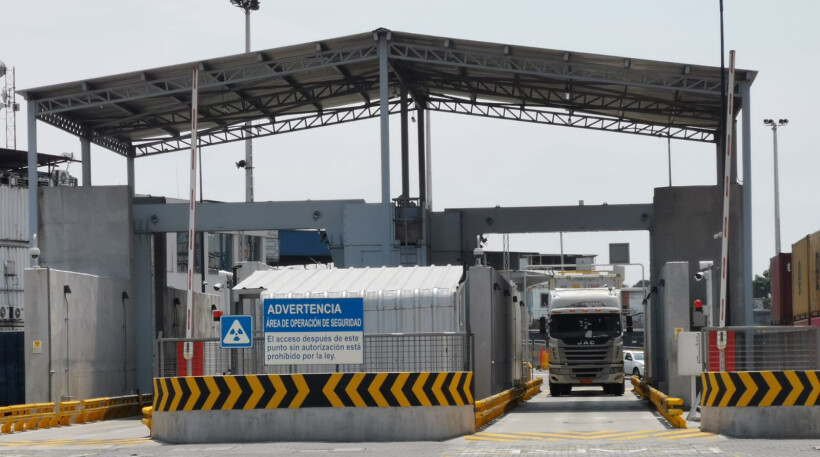
According to official data, of a total of 96.1 tons of cocaine seized in 179 containers associated with Ecuadorian exports, only 33% was detected in national territory, while 67% was intercepted in destination ports. The gap between seizures in origin and abroad has once again raised alarms about the effectiveness of control systems in Ecuador's main ports. Between the two terminals, more than 70% of the seizures recorded in the country during 2025 were concentrated. In third place was Naportec/Bananapuerto, also on Isla Trinitaria, with 15.8 tons seized, while Puerto Bolívar, in Machala, El Oro province, operated by Yilport, recorded 10.8 tons. Every truck entering the ports produces multiple X-ray images — of the vehicle, the container, and the cargo — which generates thousands of daily records that are impossible to analyze in full manually. Since 2024, Ecuador has scanned 100% of exportable cargo in its ports. This is compounded by the growing risk of cargo contamination once ships have already left the port terminals. The seizures show a strong geographical concentration. By Darío Rosatti Quito, Ecuador – February 8, 2026 – Total News Agency-TNA – Two-thirds of the cocaine linked to maritime exports from Ecuador were seized outside the country in 2025, mainly in European ports, exposing serious limitations in origin port controls and a shift in the strategies of criminal organizations. The Posorja Deep Water Port, operated by DP World, led the record with 36.1 tons seized, over a third of the total seized in Ecuadorian ports. The drug is transported in fast boats, attached to the hull of the vessels, or incorporated into the cargo with or without crew participation, to whom payments of up to $600 per kilogram of cocaine are offered. Even, according to authorities, part of the shipments can be thrown into the sea before arrival at the destination to be recovered using geolocation systems. In contrast, the Guayaquil Port, a state terminal concessioned to Contecon, reported only 2.7 tons for the entire year. Police and port sources stress that the volume of seized drug does not necessarily imply greater or lesser control, but is directly related to the volume of container traffic and routes to Europe and the United States, which are of interest to criminal organizations. The Minister of the Interior, John Reimberg, explained that one of the main factors explaining why the drug is detected more in destination than in origin is the deferred use of the information generated by port scanners. In this framework, DP World reported that it is working on the integration of advanced technological solutions in the Posorja port, considered one of the most efficient in the region. Another key element is the adaptation of drug trafficking. This phenomenon confirms that, despite the total scanning of the cargo, port control remains one of the most vulnerable links in the fight against transnational drug trafficking. It was followed by the Guayaquil Port Terminal (TPG/Inarpi), located on Isla Trinitaria, with 30.7 tons seized. The hardening of controls within terminals has pushed part of the cargo contamination to external areas, such as the access channels to the ports or directly in high seas. As Reimberg himself recognized, only about 5% of the images produced by the scanners are effectively reviewed, far below what is necessary for thorough control. Even so, the images allow for issuing alerts to destination ports even after ships have departed. This international cooperation explains why many seizures are made abroad and then certified to Ecuador as the country of origin of the information. The Ecuadorian government announced that it seeks to reverse this situation by incorporating software with Artificial Intelligence, which would allow the percentage of analyzed images to be raised above 80%. However, the bottleneck is in the interpretation of the images: the country processes more than 2.5 million containers per year, with an average of about 300 operations per hour. Authorities and specialists agree that the saturation of the scanners, the partial review of images, and the issuance of alerts after the ships have departed explain much of this disparity.