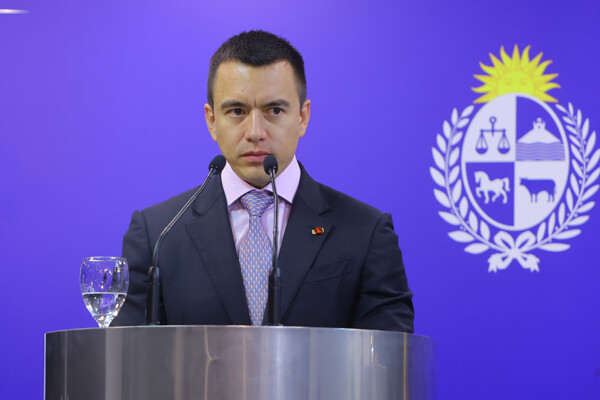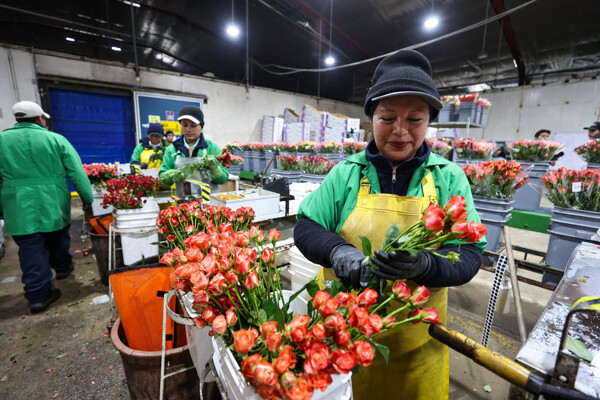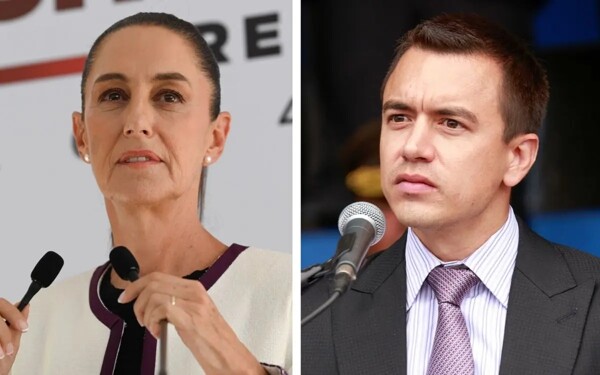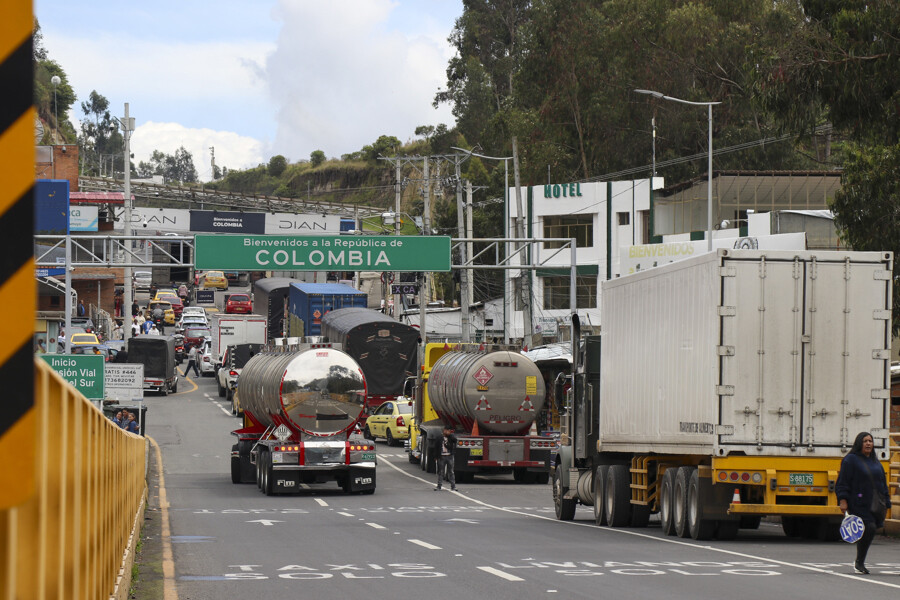
Starting Sunday, February 1, Colombia and Ecuador have imposed mutual tariffs of 30%. This measure is expected to affect the flow of trade between the two countries, which are solid trading partners exchanging goods worth 2.8 billion dollars annually, with a negative trade balance for Ecuador of over 1 billion dollars. While Colombian exports to Ecuador are around 1.8 billion dollars a year, Ecuadorian exports to Colombia barely reach 900 million, and this economic imbalance was cited by Ecuador's right-wing president, Daniel Noboa, to drag his neighbor into this trade war. In the style of U.S. President Donald Trump, Noboa announced without prior notice on January 21, while participating in the World Economic Forum in Davos (Switzerland), that he would impose a 30% tariff on Colombian imports starting February 1. In addition to the negative trade balance for Ecuador, the Ecuadorian president accused his Colombian counterpart, leftist Gustavo Petro, of not doing enough to prevent cocaine produced in Colombia from reaching Ecuador, where criminal organizations send it by sea to North America and Europe, unleashing an unprecedented violence crisis in the country. This was met with a similar measure from Bogotá for the import of a list of fifty Ecuadorian products into Colombia, including beans, rice, bananas, oils and sugar, tires, footwear, aluminum tubes, gas cylinders and bottles, ethyl alcohols, and insecticides. The largest exporter associations in both countries have stated that the escalation of trade sanctions harms both nations and have called for dialogue, which so far has taken place at the level of the foreign ministers of both countries, with no known results to date. This Saturday, the lines of trucks with cargo waiting to pass through Rumichaca, the only legal border crossing currently enabled between Colombia and Ecuador, reached 600 meters, with the aim of crossing before the tariffs came into effect. In Ecuador, exporters estimate that losses from these measures could be around 273 million dollars a year. The main products purchased by Colombia from Ecuador are canned fish, woods, vegetable extracts and oils, and shrimp (langoustine), while Ecuador buys the most from Colombia are medicines, cosmetics, insecticides, herbicides, cleaning and hygiene products, and trucks. Electrical Interconnection Cut. However, the most sensitive issue is the electricity that Colombia supplies to Ecuador during crises when the Ecuadorian power system fails to generate enough to meet domestic demand. In 2024, when Ecuador went through a severe energy crisis that led to electricity rationing with scheduled cuts of up to 14 hours a day for over two months, the sale of electricity from Colombia to Ecuador reached 334 million dollars and ranked first among Ecuadorian imports from Colombia. Therefore, along with the 30% tariffs, the government of President Gustavo Petro also suspended the supply of electricity to Ecuador from January 22. Although Ecuador currently has enough water in its reservoirs to meet domestic demand and the suspension of electricity sales from Colombia will have no immediate effects, it could be crucial later if Ecuador's main hydroelectric plants run out of water again as in the past. The electrical disconnection by Colombia was responded to by Ecuador with an increase in the transportation rate for crude oil from the Colombian state oil company Ecopetrol through Ecuadorian pipelines, from 3 to 30 dollars per barrel, a value that makes the operation unsustainable.