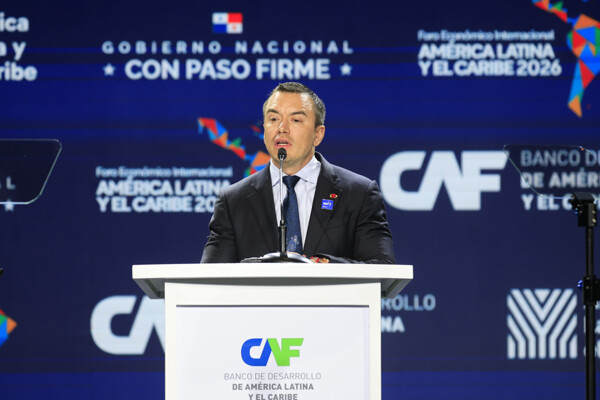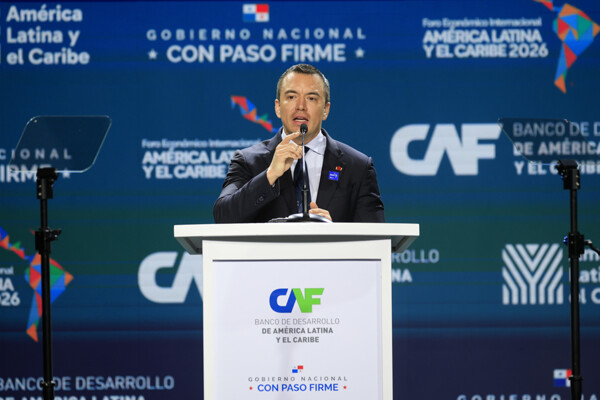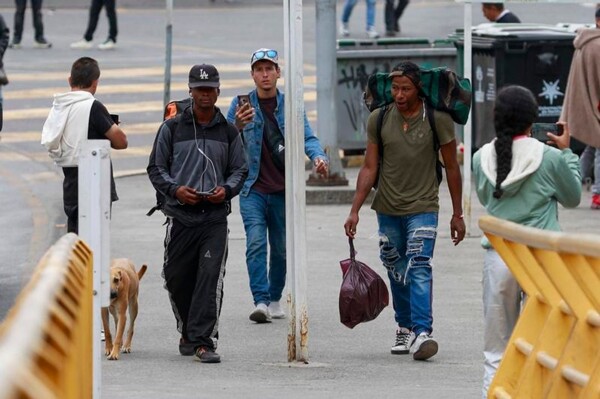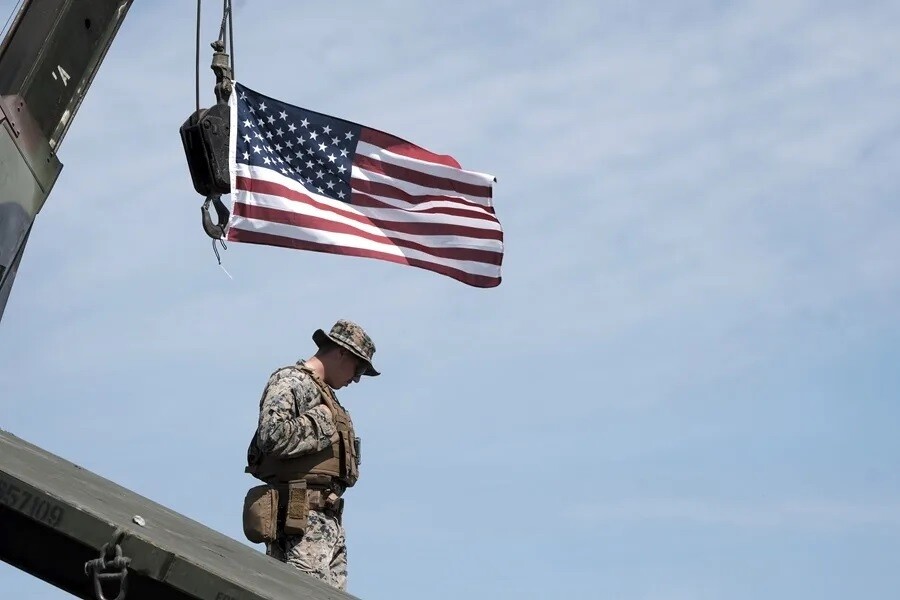
The Ecuadorian government's plan for the United States to install two bases on its territory can only be realized if, in this Sunday's referendum, the majority of citizens vote in favor of eliminating the prohibition on installing foreign military bases in the country. This measure was pushed by former President Rafael Correa (2007-2017). The Minister of the Interior, John Reimberg, announced that one base will be in Manta, the same location where U.S. armed forces were stationed between 1999 and 2009, and another in Salinas. These two sites, both located on Ecuador's continental coast, were visited last week by U.S. Secretary of Homeland Security, Kristi Noem, on her second visit in just three months to Ecuadorian territory. Reimberg detailed that one of the two bases, without specifying which, would be managed by the U.S. 'Homeland Security', the department responsible for public security, which includes counter-terrorism, border management, and cybersecurity, among other areas. 'We want to attack criminal groups with all our forces (…) Working together at two bases where our personnel can intervene in information management is what we need,' the minister continued. Ecuador has previously hosted a U.S. military base on the Galapagos Islands during World War II, and then also had one in Manta for ten years until the military was forced to leave with the enactment of the current Constitution in 2008, during Correa's term. Now, Manta is home to one of the country's most important ports and a hub for criminal group operations, which send large quantities of cocaine from the Ecuadorian coast to Central America in 'narco-speedboats'. Furthermore, Reimberg reiterated the interest of the United States, Ecuador's main ally in the fight against organized crime, in installing both bases on Ecuadorian territory, something that was reflected after Noem's visit last week, where they toured potential locations for this infrastructure. 'Why else would Noem come a second time so quickly?', the minister asked rhetorically, alluding to the fact that the secretary also visited Ecuador in July and that, on this second trip, the intention was to see the locations of Manta and Salinas with the Ecuadorian government and security forces. In fact, after the visit, Noem herself described Ecuador as an 'excellent' partner in the fight against drug trafficking, illegal immigration, and land and sea smuggling, following a two-day visit to the Andean nation, the second in just three months. For Reimberg, the city of Salinas, the westernmost point of continental Ecuador, has high strategic value to combat transnational crimes. Ecuador is experiencing an unprecedented escalation of violence, attributed to the increase in the activity of organized criminal gangs, mainly linked to drug trafficking, but which in recent years have forcefully ventured into extortion, kidnappings, and illegal mining. Since the beginning of 2024, Noboa has declared the country in a state of 'internal armed conflict' and classified criminal gangs as terrorist groups, but violence has intensified in 2025, with Ecuador recording 4,619 homicides in the first half of this year, 47% more than in the same period of 2024.