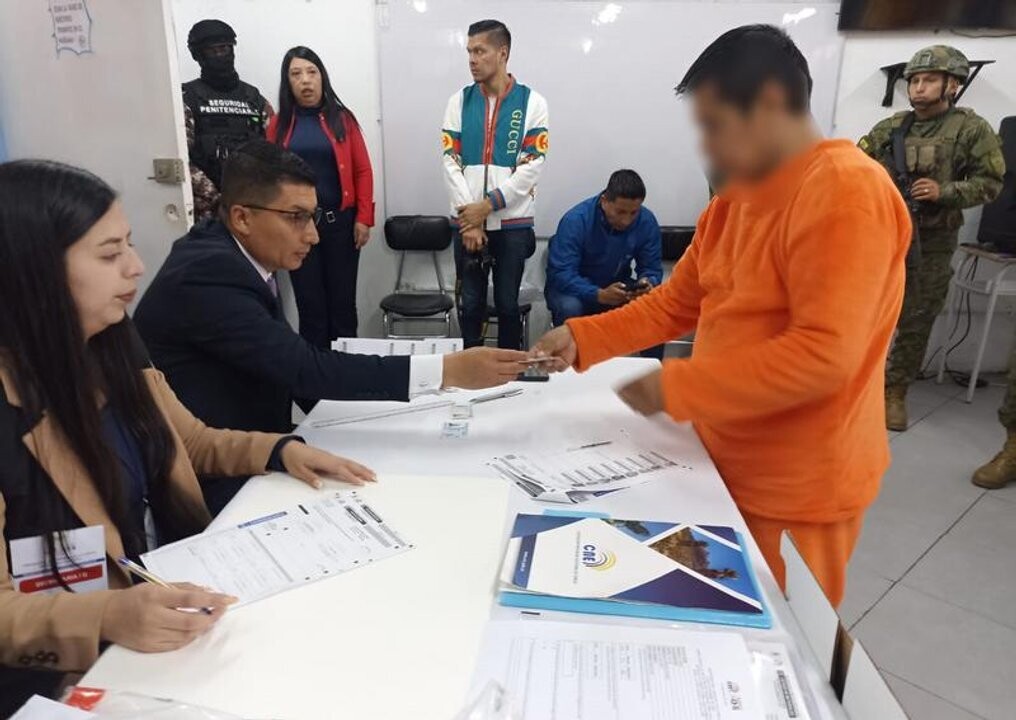
In Ecuador, 8,642 inmates without a sentence voted in prisons. Initially, around 9,000 prisoners were eligible to vote, but the number decreased after the National Electoral Council (CNE) suspended the electoral process at the Machala prison in El Oro province (south) for security reasons. This correctional center was the scene of a prison riot on November 9, which left 31 inmates dead. The CNE specified that the vote count for prisoners will take place on Sunday, November 16, at 5:00 p.m. local time, when voting will close across Ecuadorian territory. The elections will be monitored by more than 800 accredited national and international observers who are already in the country to coordinate an operational effort. A total of 8,642 prisoners without an executed conviction sentence in Ecuador voted in advance this Thursday, prior to the rest of the electorate. The president of the CNE, Diana Atamaint, inaugurated the voting day in an official ceremony in Quito, where she highlighted that the exercise constitutes a milestone of democratic inclusion in the current electoral process. "With this, we reaffirm that Ecuadorian democracy is based on respect and the equality of rights for all people," Atamaint expressed. The advance voting day took place in 41 penitentiary centers, located in 20 of the country's 24 provinces, under strict security measures in coordination with the National Service for Comprehensive Care for Deprived of Liberty Adults and Adolescent Offenders, as well as the Civil Registry, the Armed Forces, and the National Police. It is also forbidden to disseminate polls, opinions, or images that may influence the electorate's decision, nor can rallies, concentrations, or other electoral acts or programs be held. Electoral silence is in effect after midnight on Thursday, when the 13-day electoral campaign aimed at convincing Ecuadorians to vote on the four questions of the plebiscite promoted by the government concluded. The president of the CNE, Diana Atamaint, told reporters that this process allows the right to vote from home for people over 50 years of age and with a physical disability equal to or greater than 75%. The Police and the Armed Forces, in turn, have their operational plan ready to guarantee order and security on Sunday's voting day with the deployment of more than 100,000 uniformed officers across the country. The CNE also added that from noon this Friday until noon on Monday, November 17, the country's "Dry Law" is in effect, which prohibits the sale, distribution, and consumption of alcoholic beverages. In Ecuador, where voting is mandatory, the CNE also carried out the "Home Vote" process early this Friday, in which 597 voters nationwide participated, distributed across 174 Mobile Vote Reception Boards. Buenos Aires, November 15 (NA) — More than 13.9 million Ecuadorians are called to the polls to answer "Yes" or "No" tomorrow in the popular consultation that includes a question on whether they agree or not to call and install a Constituent Assembly to draft a new Constitution. Voters will also have to pronounce themselves on three other referendum questions related to eliminating the prohibition on establishing foreign military bases in Ecuador, reducing the number of legislators, and eliminating state financing for political parties, it was learned by Noticias Argentinas with information from the Xinhua agency.