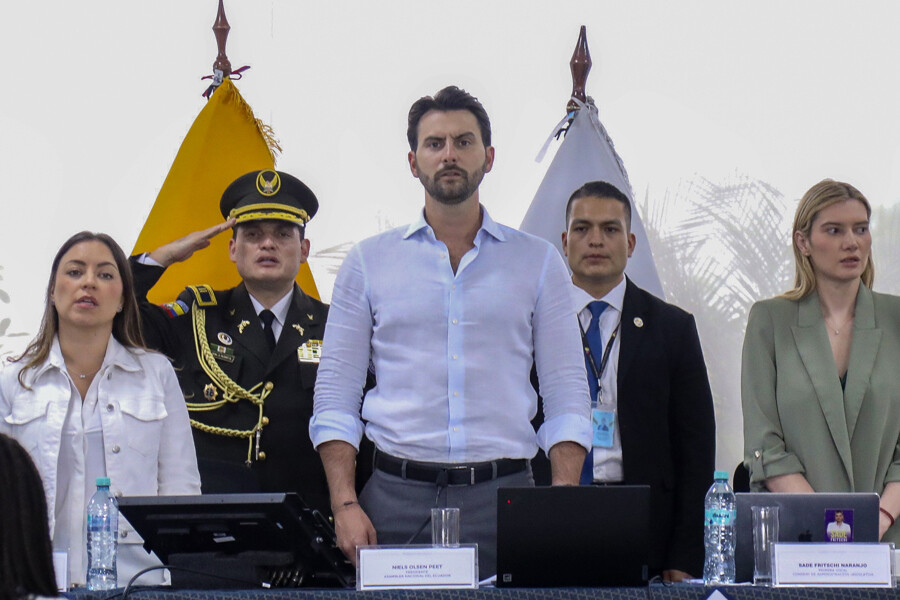
The National Assembly (Parliament) of Ecuador approved on Thursday a bill presented by the Executive branch to optimize public and private management in mining and electricity, which has been questioned by indigenous movements that fear environmental impacts and water issues. The law was approved with the vote of 77 legislators after a series of presentations in which the importance of protecting the environment, regulating mining, and the dangers that illegal mining poses to the economy and society were argued. The initiative seeks to strengthen performance in the mining and energy sectors through efficient regulation that promotes the generation of fiscal revenue and foreign exchange, and contributes to fiscal sustainability and macroeconomic stability of the State. Prior to the debate, the Confederation of Indigenous Nationalities of Ecuador (Conaie), the country's largest social organization, stated that the Assembly would decide between 'water and extractivism.' For Conaie, the law 'goes against prior consultation and flexibilizes environmental controls in favor of large corporations' as it considers that the regulation 'replaces environmental licenses with simple authorizations,' allows concessions for up to 30 years, and enables the militarization of territories. Furthermore, it warned that this would increase environmental risk, demanding that the project be archived, which was ultimately approved in the session where legislators from the opposition Citizen's Revolution (RC) movement, led by former President Rafael Correa (2007-2017), pointed out that the law does not strengthen the State but allegedly leaves it vulnerable to foreign interests. 'Environment and employment at the same time. This law allows investment with environmental control and respect for popular consultations,' said ruling party legislator Alejandro Lara, who noted that what 'destroys territories is illegality, not responsible investment.'